


P. Jan Pelczarski, OSJ
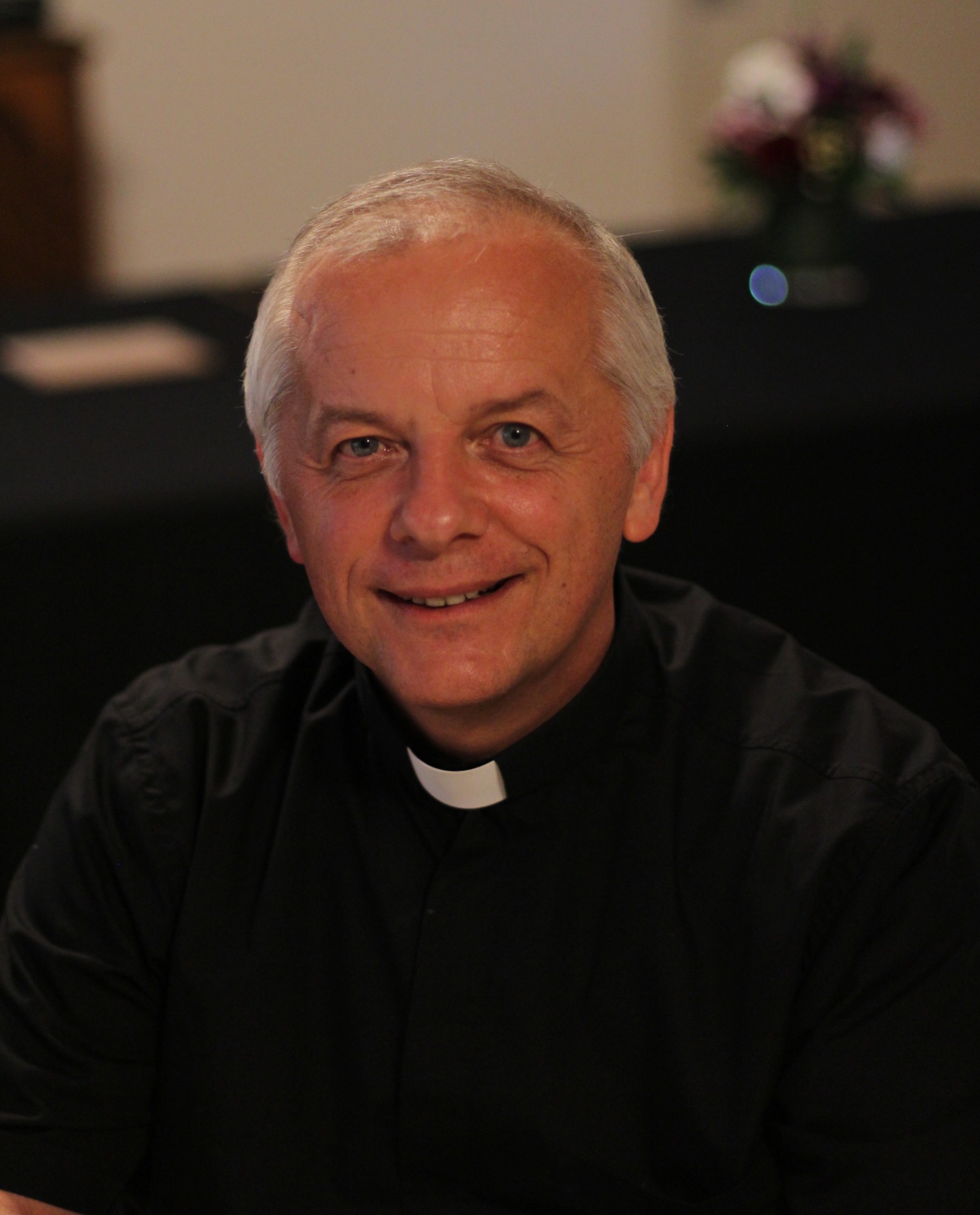
Fr. Jan Pelczarski, OSJ, is of Polish origin and serves as the Superior General of the Congregation of the Oblates of St. Joseph. He made his first religious profession in 1985 and his perpetual vows in 1989. He was ordained a priest in 1991.
He holds a licentiate in Moral Theology from the Pontifical Lateran University in Rome. Additionally, he earned a doctorate in Spiritual Theology from the Teresianum and a master’s degree in Bioethics from the Regina Apostolorum Athenaeum.
Introduction
The theme that accompanies us in this conference arises from the very heart of the charism of Saint Joseph Marello and from his fundamental spiritual insight: the Oblates of Saint Joseph are called to live at the school of Saint Joseph, making the care of the interests of Jesus their own mission.
The question that will guide our reflection is therefore this: what does it mean today to care for the interests of Jesus? How can we live this charge received from the Founder in the first half of the twenty-first century, in a historical context that has profoundly changed and is marked by new cultural, social, ecclesial, and spiritual challenges? And, above all, how can we remain faithful to the charism without merely repeating the forms of the past, but allowing the Holy Spirit to inspire new apostolic expressions?
Fidelity and creativity are not two opposing realities. Fidelity without creativity risks becoming mere preservation; creativity without fidelity, on the other hand, risks losing its identity. True fidelity to the charism is creative fidelity: it safeguards the original source of the gift received and, at the same time, knows how to respond to the new needs of the men and women of our time.
Our reflection will unfold in three moments.
In the first part, we will briefly seek to deepen the theological and pastoral meaning of the expression “to care for the interests of Jesus,” highlighting its biblical and spiritual foundation. We will begin with the figure of Saint Joseph, as he emerges from the Gospels, in order to understand how he lived his mission in total availability to God’s plan and in the daily care of the person and mission of Jesus.
In the second part, we will present three concrete examples of pastoral creativity, born from Marellian spirituality in different parts of the world, also making some reference to the reality of Mexico. They show how our charism continues to generate new responses to the needs of the present time. Creativity does not arise from the pursuit of novelty for its own sake, but from the ability to read the signs of the times in the light of the Gospel and to translate the gift received into new forms of service.
Finally, in the third part, we would like to dwell on some challenges that today concern those who, following the charism of Saint Joseph Marello, devote themselves to caring for the interests of Jesus. These challenges concern the way of living one’s vocation, seeking to remain united to Christ and to allow oneself to be guided by his Spirit.
1. Saint Joseph: the First Guardian of the Interests of Jesus
The expression “to care for the interests of Jesus” constitutes one of the deepest insights of the spirituality of Saint Joseph Marello and represents a fundamental interpretative key to the charism of the Oblates of Saint Joseph. It does not arise simply from a particular spiritual sensitivity, but has its roots in the very heart of the Gospel and in the biblical witness of those who have made their lives a service to God’s plan.
The starting point is found in the words of Saint Paul in the Letter to the Philippians: “Everyone seeks their own interests, not those of Jesus Christ” (Phil 2:21). The Apostle, speaking of Timothy’s mission, highlights an essential difference between two ways of living: on the one hand, a life centered on oneself, on one’s own desires and advantages; on the other, a life open to Christ and to his mission. Timothy is presented as one who has learned to assume the same dispositions as the Lord: caring for others, placing the good of the community first, and dedicating his existence to the Gospel.
The interests of Jesus coincide with what lies in the heart of the Son and ultimately include participation in his fundamental concern: the salvation of humanity and the fulfillment of the Father’s will.
Within the biblical perspective, Saint Joseph appears as the brightest model of one who cares for the interests of Jesus. The Gospels do not record any words spoken by him, but present a life totally oriented toward the fulfillment of God’s plan. Joseph is the man who accepts a mission he did not choose, enters into a mystery greater than his own plans, and places his existence at the service of the history of salvation.
In the mysteries of Jesus’ childhood, as well as in his hidden life at Nazareth, Joseph continues to care for the interests of Jesus. Through daily work, family life, education, and the transmission of faith, he contributes to creating the conditions in which the Son may grow “in wisdom and age and grace before God and men” (Lk 2:52). His service is hidden, but essential. Joseph does not publicly proclaim the Gospel and does not perform great visible works; nevertheless, he silently prepares Christ’s mission through fidelity to the daily responsibilities that God has entrusted to him.
It is precisely this aspect that deeply impressed Saint Joseph Marello. He recognizes in Joseph of Nazareth the model of the apostle called to live not for himself, but for the interests of Jesus. Just as Joseph dedicated every thought, every work, and every energy to the guardianship of the Redeemer, so the disciple is called to orient his entire life toward the service of Christ.
From this perspective, caring for the interests of Jesus does not mean merely doing something for Him, but living for Him. It means allowing oneself to become involved in his mission, taking his concerns as one’s own, and placing one’s life, abilities, and time at God’s disposal.
2. Caring for the Interests of Jesus Today: Fidelity to the Charism and Creativity in Mission
The fundamental question confronting the Marellian charism in the Church is this: how can we continue today to care for the interests of Jesus, remaining faithful to the gift received and, at the same time, responding creatively to the challenges of the present? The answer cannot be sought either in the simple repetition of the forms of the past or in the pursuit of the novelties of the moment. It arises from a spiritual discernment capable of safeguarding the original source of the charism and, at the same time, of allowing itself to be guided by the Holy Spirit toward new paths.
Saint Joseph represents the model of this balance. He remains totally faithful to the mission entrusted to him by God: to guard Jesus and Mary. Yet this fidelity is not expressed through predefined schemes. Joseph must face unforeseen situations, make new decisions, and find concrete solutions. His fidelity is creative because it springs from a profound love for the persons entrusted to his care. He does not possess an answer already prepared for every situation, but he possesses what is essential: a heart totally available to love and serve Jesus.
The same dynamism belongs to the Marellian charism. Saint Joseph Marello did not simply leave us works to preserve, but a spiritual attitude to live: to be men totally oriented toward Christ, ready to recognize where, today, He desires to be served. The charism defines the apostolic priorities of the Institute, to be carried out with passion and with the willingness to consecrate one’s life so that the Lord may be known, loved, and followed.
For this reason, fidelity to the charism requires a continual return to the origins. We must rediscover the heart of the Founder’s insight: the spirituality of Saint Joseph, the centrality of Christ, ecclesial communion, humble and hidden service, educational and pastoral concern, especially for the younger generations. These elements constitute the permanent source from which we draw in order to face the challenges of the present.
At the same time, fidelity demands creativity. A charism is not a static heritage to be preserved in a museum, but a living gift entrusted to the responsibility of new generations. Like a seed that remains faithful to its nature but produces new fruits according to the soil in which it is planted, so the Marellian charism is called to become incarnate in different cultures and in new ecclesial and social situations.
Fidelity to the charism, therefore, consists not only in preserving what we have received, but also in knowing how to discern where, today, the interests of Jesus ask us to be present and what concrete form our service should take. It is from this perspective that I would like to dwell briefly on some challenges that are particularly significant for our mission.
This is how the charism of Saint Joseph Marello continues to live: not simply by repeating what has been done, but by safeguarding the same spiritual heart and seeking, with creativity and discernment, what Jesus asks us today to do for Him and for his brothers and sisters.
3. Creative Responses to New Challenges
Let us now present three concrete examples of a creative response to the new circumstances of our time. They are experiences that differ from one another, but are united by the desire to read the needs of people and, in the light of the Gospel and the charism of Saint Joseph Marello, to find concrete responses.
These examples show us how pastoral charity is not something static, but knows how to renew itself and find new forms of being close to people, especially where new forms of poverty and new needs emerge.
3.1. The Spirituality Center: A Response to the Contemporary Person’s Thirst for God
Among the great challenges facing the Church in the twenty-first century is that of responding to the growing thirst for spirituality that runs through the heart of contemporary humanity. We live in a time marked by profound social changes, and the advent of artificial intelligence and the future scenarios make it possible to point toward further and radical changes in various areas of life. The struggle against poverty, the promotion of peace, the protection of human rights, and the safeguarding of creation constitute indispensable dimensions of the Christian mission.
Yet alongside these urgent concerns, another need is emerging with great force, often less visible but not less decisive: the need to satisfy spiritual thirst. People today possess extraordinary means of communication and of improving the material conditions of existence, but at the same time they continue to question the meaning of life, the value of suffering, love, and death; and no scientific or technological progress can replace the search for the Absolute.
The Marellian charism is called to respond to this fundamental desire of humanity. As the Gospel reminds us, “Man does not live by bread alone” (Mt 4:4): the heart needs the Word of God, prayer, the sacraments, and a spiritual journey that helps people read their own lives, as was once said, sub specie aeternitatis.
From this perspective, Spirituality Centers are becoming increasingly important. They represent one of the most creative expressions of pastoral ministry because they offer people spaces for silence, listening, formation, and spiritual accompaniment. In a world dominated by hyperconnectivity and noise, these places become authentic oases in which to rediscover God’s presence and recover the unity of one’s existence.
Faithful to the charism of Saint Joseph Marello, we understand that evangelizing today also means creating places where Josephite spirituality can be known, studied, celebrated, and lived. Saint Joseph, a man of silence, active faith, and hidden life, continues to speak with surprising relevance to contemporary humanity, often disoriented by the fragmentation and frenzy of daily life. His witness teaches that holiness is born from fidelity in small things, from trust in Providence, and from the ability to transform daily work into a place of communion with God.
The Congregation has established, on different continents, sanctuaries, spirituality centers, and houses of hospitality, where priests, religious, and lay people can live transformative spiritual experiences. Places such as the Spirituality House in Tagaytay, in the Philippines, the one in Paestum, Italy, and the Karuna Ashram in Vagamon, India, testify that evangelization also means creating spaces where people can stop, and in the light of the Word of God rediscover themselves.
The Josephite Marellian Spirituality Center of Apucarana, in the Nossa Senhora do Rocio Province in Brazil, has as its mission making Saint Joseph known so that, through his example and intercession, the men and women of our time may rediscover the beauty of the spiritual life and find again the path that leads to the Lord.
One of the most significant aspects of the work carried out at Apucarana is the close collaboration between Oblates and lay people in organizing retreats and spirituality courses and in producing and disseminating printed, digital, and television materials. Spirituality is not presented as a reality reserved for a few specialists, but as a path accessible to every baptized person.
Every three months, the Center publishes the journal Studi Giuseppini, which contains contributions from scholars from different countries and promotes dialogue between academic research and ecclesial life, demonstrating how the figure of Saint Joseph continues to offer fruitful perspectives for contemporary theological reflection.
Evangelization also passes through beauty. For this reason, the Center preserves an extraordinary iconographic exhibition dedicated to Saint Joseph, consisting of approximately two thousand works from different cultures, alongside a collection of approximately four thousand images of the Virgin Mary. The contemplation of sacred art thus becomes a path of catechesis and prayer, capable of speaking even to those who approach the faith through the language of beauty.
The spirituality offered by the Center, however, is not limited to intellectual formation. Through the Kairos Program, it offers concrete accompaniment to people going through situations of vulnerability. Psychologists, educators, physiotherapists, lawyers, and other professionals freely place their expertise at the service of those seeking human, psychological, spiritual, or legal support. In this way, a form of integral evangelization is realized, in which the proclamation of the Gospel is united with care for the person in all of his or her dimensions.
3.2. Guardians of the Gospel of Life
Josephite spirituality, born from contemplation of Saint Joseph’s mission as guardian of the Redeemer, is not limited to proposing a private devotion, but becomes a source of concrete attitudes toward life, family, and society. Among the most significant expressions of this spiritual creativity is the commitment in favor of nascent life, because precisely in the guardianship of the Child Jesus we glimpse the model of welcoming and protecting vulnerable life.
Saint Joseph is the one who receives from God the task of guarding the mystery of incarnate life. His mission begins beside Mary at the delicate moment of pregnancy. Faced with the mystery of a life growing in the Virgin’s womb, Joseph is called to make an act of profound faith: to welcome what he does not fully understand and to protect the One entrusted to his care.
In the silence of the house at Nazareth, Joseph continues this mission of guardianship. He prepares the place where Jesus will be born, accompanies Mary at the time of childbirth, and welcomes the Son of God in the simplicity and poverty of the cave at Bethlehem. His discreet presence reveals a fundamental truth: life needs to be welcomed, accompanied, and protected, especially when it does not yet possess a voice with which to defend itself.
In the light of this mystery arises the creativity of Josephite spirituality in the field of pro-life pastoral ministry. The culture of life requires an integral pastoral approach. It includes education concerning the value of human life from conception until natural death, the formation of consciences, support for families, accompaniment of women experiencing difficult pregnancies, and spiritual closeness to those who bear wounds associated with the experience of abortion. Josephite spirituality teaches that truth must always be accompanied by charity and that the defense of life must be lived with the same paternal heart with which Joseph guarded Jesus.
In the United States, the Oblates of Saint Joseph have developed various initiatives in this direction. For years, the confreres have promoted parish programs on the value of human life and on the Christian responsibility to protect it from conception onward. Through meetings, catechesis, and pastoral programs, they help communities develop a culture of life founded on the Gospel and on the inviolable dignity of every person.
This witness also finds a public expression in participation in the Walk for Life in San Francisco. Participation in these initiatives is not merely a declaration of principles, but also an act of solidarity with those who have no voice and an invitation to society to rediscover the beauty of welcoming life.
In pro-life concerns, another essential dimension must also be emphasized: the healing of wounds. The defense of life cannot forget the suffering of so many people involved in the experience of abortion. This experience can leave deep physical, psychological, and spiritual wounds. For this reason, it is necessary to offer not only teaching on the sacredness of life, but also paths of mercy, reconciliation, and inner healing.
In Santa Cruz, California, next to the Shrine of the Guardian of the Redeemer, a particular image of Saint Joseph expresses this mission eloquently. The bronze statue depicts Joseph seated on a bench while holding an unborn child in his hands. His face conveys tenderness and protective strength at the same time. It is the image of a father who welcomes life and accompanies human suffering with compassion. Before this representation, many people can find a space for prayer and hope, recognizing that God’s mercy is greater than every wound.
Also in Bakersfield, next to the Oblates’ church under construction, the Garden of Memory bears witness to this spirituality of guardianship. At its center are statues of the Holy Spouses, Our Lady of Guadalupe, and Saint Joseph, dedicated to the memory of unborn children. This place has become a space of consolation for families who have experienced the pain of abortion and, at the same time, a public testimony to the sacredness of every human life. The memorial proclaims a Christian hope: no life is lost before God, and every person remains held in the eternal love of the Father.
A similar spiritual sensitivity is reflected in the program of the Marellian Josephite laity in Mexico, where the figure of Saint Joseph has been proposed as a model of consolation and spiritual healing for people marked by the experience of abortion. The starting point is profoundly evangelical: the One who guarded the nascent life of Jesus continues today, through his intercession, to care for wounded lives, helping people rediscover the mercy of God.
Pastoral creativity inspired by Saint Joseph consists precisely in knowing how to read human vulnerability and the wounds of the present time in the light of the Gospel. The Marellian charism does not remain closed in the past, but generates new forms of closeness and mercy. Just as Joseph welcomed Mary and Jesus in a situation marked by uncertainty and vulnerability, so today we are invited to welcome every wounded person with respect, compassion, and hope.
3.3. Creative Charity at the Service of Migrants
Among the many aspects of the figure of Saint Joseph that have recently been rediscovered, one has particular relevance today: that of patron of migrants, refugees, and displaced persons. This is not merely a devotional attribution, but a profoundly evangelical reading of his mission in the history of salvation. For this reason, his experience sheds light on one of the great challenges of our time: the drama of migration.
Migration is today a global reality involving millions of people. Wars, persecution, violations of human rights, poverty, climate change, and economic inequalities force entire populations to leave their homeland. Behind the statistics are faces, stories, hopes, and sufferings. The Church cannot observe this reality as a spectator, because the Gospel calls her to recognize in the migrant the very face of Christ.
It is significant that the Son of God experienced migration from childhood. The Gospel account of the flight into Egypt (Mt 2:13-15) presents the Holy Family as being forced to abandon their home in order to escape the violence of Herod.
Joseph receives the angel’s command in a dream, rises during the night, takes Mary and the Child with him, and departs for a foreign land. He does not know what awaits him, but entrusts himself completely to God. He thus becomes the guardian of a family in flight, sharing its insecurity, the hardship of the journey, and the uncertainty of the future. His silent presence teaches that the first way of loving consists in protecting fragile life. To guard means to welcome the person in his or her dignity, protect that person in moments of vulnerability, accompany him or her on the path of integration, and help rebuild his or her life.
The Oblates of Saint Joseph have also known how to recognize in the history of migration an authentic field of apostolate. If in the last century it was mainly Italian Oblates who departed to accompany their fellow countrymen who had emigrated to Belgium, Brazil, and the United States, today it is confreres from the young Churches of Asia who are being sent to Italy to serve immigrant communities. Thus, a form of missionary reciprocity is realized that manifests the maturation of the Congregation and the catholicity of the Church: the Churches that once received missionaries are now themselves agents and protagonists of evangelization.
In Italy, moreover, some houses temporarily without a religious community have been assigned to welcome migrants, as in the case of Villa Quaglina and Este. Not less significant are the experiences of welcome and integration lived in the community of the Provincial House of Barletta-Sterpeto, where a family from Ghana has been welcomed.
This evangelical inspiration takes shape in numerous works of the Church scattered along the great migration routes of the world. A significant example is the Migrant House of the parish of Huichapan, in Mexico. Located beside the railway line traveled by thousands of migrants heading toward the United States border, it has become an authentic place of mercy. Every month it welcomes hundreds of people from Central and South America, offering them a hot meal, a bed, essential medical care, listening, and spiritual accompaniment.
Many of these migrants undertake one of the most dangerous journeys on the American continent. They board freight trains, cross territories controlled by organized crime, and are exposed to violence, extortion, and exploitation. In this context, the Migrant House represents much more than an assistance center: it is the concrete sign of a Church that chooses to stand beside the most vulnerable. Together with many other works promoted by dioceses, religious congregations, and ecclesial organizations, it bears witness to the fact that the Gospel becomes credible when it becomes closeness.
Here one of the most beautiful aspects of Christian charism emerges: the creativity of charity. Charity consists not only in responding to immediate needs, but in the ability to allow oneself to be challenged by new forms of poverty and to find ever-new forms of service. Every age poses different questions, and the Spirit inspires new responses. Fidelity to the Gospel is not measured by simply repeating the works of the past, but by the ability to embody Christ’s mercy today.
The prayer of the Seven Sorrows and Seven Joys of Saint Joseph, which we traditionally recite every Wednesday in our communities, expresses this conviction with simplicity. The Congregation invokes Saint Joseph with these words: “Grant that the charity among us, your children, may continually increase, leading us to love all people as our brothers and sisters.”
It is a supplication that summarizes the deepest meaning of our mission. The creativity of charity is born, in fact, from the Eucharist, where we learn to recognize Christ present in the broken Bread and, at the same time, in the face of every suffering person.
4. Some Challenges Related to the “Care of the Interests of Jesus”
In this third part, we would like to dwell on some urgent concerns that today affect those dedicated to the “care of the interests of Jesus.” These are needs that invite us to look attentively at the way we live our vocation and serve the Church and people. In the light of the example of Saint Joseph Marello, we will seek to understand how to remain faithful to Christ while facing the new situations of our time with balance and creativity.
4.1. The Challenge of Maintaining Balance
To adequately complete this reflection, we must remember that the Marellian charism is not exhausted in “caring for the interests of Jesus,” understood primarily as apostolic commitment. Saint Joseph Marello places alongside this expression another essential dimension: “living in intimate union with the Divine Word.” The two realities cannot be separated, but illuminate and sustain one another.
There is, in fact, a real risk of concentrating so intensely on the interests of Jesus that we lose sight of Jesus Himself. One can become very involved in works, pastoral activities, education, and community animation and yet progressively lose one’s personal relationship with the Lord. In such a case, service risks becoming activism and mission mere organizational efficiency.
Saint Joseph offers a different and profoundly evangelical perspective: before guarding Jesus’ mission, he guarded His Person; before concerning himself with the things of the Kingdom, he lived daily beside the One who is its center and Lord. The same spiritual dynamic applies to us. We cannot authentically care for the interests of Jesus unless we cultivate a profound friendship with Him.
Our spiritual growth, the quality of our interior life, and the depth of our relationship with God are not something additional to the interests of Jesus, but constitute an integral part of them. Personal sanctification is also a concrete form of caring for the interests of Christ, because it makes our lives transparent to His presence in the world.
Caring for the interests of Jesus always also includes caring for one’s own heart and one’s communion with Him. It is Christ Himself who continues to care for the world through men and women who remain united to Him.
Saint Joseph Marello had clearly understood this truth. His intense pastoral activity and his love for the Church flowed from a profound union with God, cultivated in prayer, meditation on the Word, and sacramental and ecclesial life. For him, authentic apostolate did not arise from agitation, but from a heart inhabited by the Lord. Only what overflows from a true experience of God, lived in the depths of the heart and within the Christian community, can become fruitful service to others.
Like Saint Joseph, who listened and welcomed God’s will before acting, we too are called to find that balance which allows mission to spring from communion with the Lord and continually return to Him.
In the words of Pope Francis, addressed to the members of our Institute during the audience granted after the 2018 General Chapter, the expression “Carthusians and apostles,” prayerful and evangelizing at the same time, represents a “happy synthesis” left to us by Saint Joseph Marello (Discourse to the Oblates of Saint Joseph, August 31, 2018).
In order to be incisive witnesses of the Kingdom of God, it is necessary to love prayer, to live “in intimate union with the Divine Word,” and to allow oneself to be renewed by constant dialogue with the Lord. It is from this communion that the inspiration and strength necessary for authentic apostolate flow.
4.2. The Challenge of Safeguarding Passion for Christ
One of the great challenges of religious and apostolic life is to awaken, safeguard, and constantly renew passion for Christ throughout the whole of one’s existence. At the beginning of the vocational journey and of lay commitment, enthusiasm often arises spontaneously and generously; as the years pass, however, it needs to be nourished, purified, and continually renewed. Passion for Jesus, for the Gospel, and for the mission is not a passing emotion, but a fire to be guarded every day through prayer, the support of the community, and living contact with the people entrusted to us.
It is precisely passion that generates apostolic creativity in caring for the interests of Jesus, pushing us to seek ever-new paths for proclaiming the Gospel and responding to people’s concrete needs. Where there is passion, initiatives arise, difficulties are faced with hope, and unsuspected inner energies for service are discovered. When passion, on the other hand, fades, there is a risk of settling for the bare minimum, repeating gestures and activities without conviction, and gradually allowing oneself to become imprisoned by routine and indifference.
Saint Joseph Marello desired religious men, religious women, and lay people animated by an ardent love for Jesus and for the Church, because he knew that only a passionate heart can truly care for the interests of Jesus. For this reason, it is necessary to return continually to the source of one’s vocation, in order to rekindle the gift received and continue to serve with joy, generosity, and creativity.
Alongside this perspective, we must also recognize certain weaknesses that may emerge in the concrete experience of religious, priests, and committed lay people. At times, forms of spiritual and pastoral demotivation appear that directly affect the quality of service. It can happen that mission is lived in a “soft” manner, with a progressive weakening of interior participation, eventually showing signs of existential weariness and a certain “pastoral stagnation.” In such situations, one is present in activities but without genuine involvement, and sometimes with an attitude of detachment or disinterest.
It is also a cause for concern when someone, despite being deeply engaged in caring for the interests of Jesus, appears to be inwardly lacking joy. Without spiritual joy, life loses its attractiveness and its power of witness. When evangelical joy disappears, life risks becoming dull, and the temptation arises to seek compensations elsewhere or to adopt attitudes of distance, eventually becoming mere observers or critics of those who, instead, actively engage in the mission.
For this reason, the theme of the last General Chapter found inspiration in the words of Saint Paul: “I remind you to rekindle the gift of the vocation you have received.” In continuity with this appeal, the next Council of the Congregation, which will begin next week in Monterrey, is also situated under the sign of a renewed missionary awareness: “Hearts on Fire and Feet on the Journey: Beyond the Jubilee 2028.” It is an invitation to awaken passion for Christ in the lives of lay people, priests, and religious, so that the mission may not lose its inner momentum.
Passion is born and nourished in personal and communal prayer, in encounters with people living in situations of need, and in fraternal life in community. From these sources flows a joyful, creative, and persevering service, capable of making the living presence of Christ visible in the Church and in the world.
4.3. The Challenge of Maintaining One’s Charismatic Identity
A fundamental challenge for those committed to caring for the interests of Jesus is to safeguard, deepen, and continually renew their identification with the charism of the Institute. The task of formation, both of religious and priests and of lay people, consists precisely in ensuring that the Founder’s spiritual experience progressively becomes an integral part of the identity of every member of the Institute and, to a certain extent, also of those lay people who share the same spirituality. It is not enough to know the history of the Congregation, admire its Founder, or appreciate its apostolic works; it is necessary to assimilate the way of seeing, feeling, and living the Gospel that the Holy Spirit has given to the Church through the founding charism.
This process cannot be taken for granted. Identification with the charism requires a continual journey of spiritual appropriation and personal conversion. At times it can weaken or lose its effectiveness. It may happen, for example, that a religious priest identifies primarily with the priestly ministry, lived according to a more diocesan style, leaving in the background the specificity of religious life and the richness of his own charism.
In other cases, one may be tempted to interpret apostolic life primarily from the perspective of one’s own sensitivities, preferences, or personal convictions, rather than allowing oneself to be shaped by the spiritual tradition of the Institute. There are also situations in which other spiritualities, ecclesial movements, or saints who are particularly appreciated in the pastoral context are enthusiastically promoted, while reference to the charismatic heritage received from the Founder risks passing into the background.
In the case of lay people who share the Marellian charism, there is a risk of belonging simultaneously to different groups, following different formation programs, and assimilating very diverse spiritual orientations. In the end, rather than a harmonious synthesis, a kind of fragmented mosaic may be created, in which it becomes difficult to identify a unifying center. The result may be a certain spiritual dispersion, making it more difficult to mature in a coherent and stable way of life.
Every charism, in fact, possesses its own internal logic, a particular way of reading the Gospel, praying, living ecclesial communion, and interpreting mission. Certainly, the Church lives from the richness of many spiritualities, and all the saints belong to the entire People of God; nevertheless, every religious family is called to safeguard and develop the particular gift entrusted to it for the building up of the Church.
One of the most delicate urgent concerns facing religious life today is that of safeguarding and manifesting one’s charismatic identity within the ordinary pastoral life of the Church. In many ecclesial contexts there is a risk of progressive uniformity among religious institutes. Parishes entrusted to different congregations sometimes end up looking alike in every respect: the same programs, the same methods, the same pastoral activities. The only visible difference seems to be the coat of arms on the door of the rectory or the image of the Founder hanging on a wall. When this happens, the charism risks being reduced to a decorative element of historical memory rather than remaining a living principle that inspires mission.
Fidelity to the charism does not consist in doing things differently from others simply for the sake of distinction, but in living the common mission of the Church through a particular spiritual and pastoral sensitivity. Every charism is a gift of the Spirit for the building up of the Body of Christ and offers an original perspective through which to read the needs of the People of God and respond to them. For this reason, a parish entrusted to the Oblates of Saint Joseph should be able to manifest concretely certain characteristic features of its spirituality.
For the Oblates of Saint Joseph, this means continually returning to the school of Saint Joseph Marello and to his fundamental insight: learning to care for the interests of Jesus following the example of Saint Joseph. It means allowing oneself to be formed by a spirituality that unites contemplation and action, abandonment to Providence and apostolic dedication, humility and zeal for the Kingdom of God.
When this conviction becomes a criterion of daily life, the charism does not remain a mere institutional or historical reference, but becomes a spiritual force capable of guiding personal choices, animating fraternal life, inspiring apostolic work, and strengthening the sense of belonging to the Congregation.
Only a profound identification with one’s own charism makes it possible to transmit it to new generations, inculturate it in different contexts, and keep it alive, creative, and fruitful amid the changing conditions of the Church and the world.
4.4. The Challenge of Transmitting the Charism to New Generations
The responsibility of consecrated life today is to transmit the charism to new generations, with sensitivities and languages different from those of the origins. At times there is a temptation to consider the charism as a treasure to be preserved intact, as though it were something to be protected rather than lived. In reality, it is not a relic of the past, but a living reality, a gift of the Holy Spirit to the Church, so that it may continue to generate life throughout history. Like a seed, the charism preserves its identity not when it remains untouched, but when it accepts being entrusted to the earth, leaving behind certain forms of the past in order to bear fruit under new conditions.
From this perspective, fidelity does not coincide with simple repetition, but with the ability to allow oneself to be continually regenerated by the Spirit. The Marellian charism, like every authentic ecclesial gift, is not tied to a particular era or language, but to an inspiration that can and must become incarnate in different historical situations. The decisive question, therefore, is not how to reproduce the past, but how to make the original spiritual experience from which the Congregation was born communicable today.
A privileged means of this transmission is storytelling. The charism, in fact, is transmitted not only through concepts or norms, but also through a living and narrated memory. Telling the story of the Founder’s life, the style of the first confreres, the experiences of the communities of the beginnings, and the testimonies of those who faithfully embodied the charism means making it present and operative once again.
The tradition of reading the list of deceased confreres is a significant example. It is not merely a matter of remembering biographies, but of recognizing in their lives concrete forms of fidelity and conformity to the charism. When it is said of someone that “he was a true Oblate,” this expresses recognition of a life deeply shaped by the gift received and lived according to the spirit of the Congregation.
From a theological point of view, this narrative dimension is profoundly consistent with the logic of Revelation. Christian faith is transmitted through a narrated history: the Gospel is not simply a system of ideas, but the account of God’s saving action in history. For this reason, the charism is also communicated above all through lived and narrated memory. A Congregation that ceases to tell its own story risks slowly losing its spiritual identity.
In this regard, we can also understand the wisdom of Saint Benedict, who recommended the periodic reading of the Rule in the community so that the monastic way of life might always remain alive and relevant. Similarly, the reading of the Constitutions can become a genuine instrument of formation and spiritual renewal, especially when emphasis is placed on the sections concerning the style of life and spirituality, and not only on juridical aspects.
The transmission of the charism also takes place through the concrete lives of those who have received it. Every religious, every priest, and every lay person who identifies with the charism becomes, for better or for worse, a means of communicating it. Daily life is always a witness: it can be attractive and life-giving, or dull and counter-witnessing. A coherent life, filled with joy and charity, becomes proclamation in itself; a lifeless or unenthusiastic life, on the other hand, risks obscuring what it should manifest.
Finally, transmitting the charism requires the courage to engage with cultural changes. New generations often do not possess an immediate religious language, and traditional spiritual categories can sometimes seem distant from their experience. This is not an obstacle to be regretted, but a call to discern new languages capable of communicating the original experience of the Spirit.
Transmitting the charism therefore means entering into a living dynamic of memory, storytelling, witness, and renewal, so that what was born in the heart of Saint Joseph Marello may continue to generate life in the Church and in the world of every age.
Conclusion
Having reached the end of this reflection on the theme “Caring for the Interests of Jesus in the Face of Today’s Challenges: Fidelity and Creativity,” we can recognize that this expression does not simply indicate an apostolic task or a pastoral program, but defines a true way of life in following Christ.
As a Marellian family, we are continually called to ask ourselves the fundamental question: what are the interests of Jesus today that await our care and service? They are manifested wherever life asks to be welcomed, where faith needs to be proclaimed, where young people seek guidance, where families need support, where wounded people await mercy and hope.
Saint Joseph Marello reminds us that every word, every step, every desire can become an expression of caring for the interests of Jesus. Nothing is too small when it is lived for Christ. Mission is born from the daily gestures of fidelity, from hidden availability, from the ability to recognize and love what God loves.
For this reason, fidelity and creativity are not two opposing attitudes. True fidelity to the charism generates creativity, because it urges us to seek, in new situations, the paths through which we may continue to care for the interests of Jesus. And true creativity remains faithful when it springs from listening to the Spirit and from communion with Christ.
Let us therefore entrust the future of our mission to Saint Joseph, asking him to accompany us on our journey and to teach us, as he did, to live in intimate union with Jesus and to care for His interests with a faithful, ardent, and creative heart.
Saint Joseph Marello, teach us to care with joy and passion for the interests of Jesus!