


P. Miguel Piscopo, OSJ
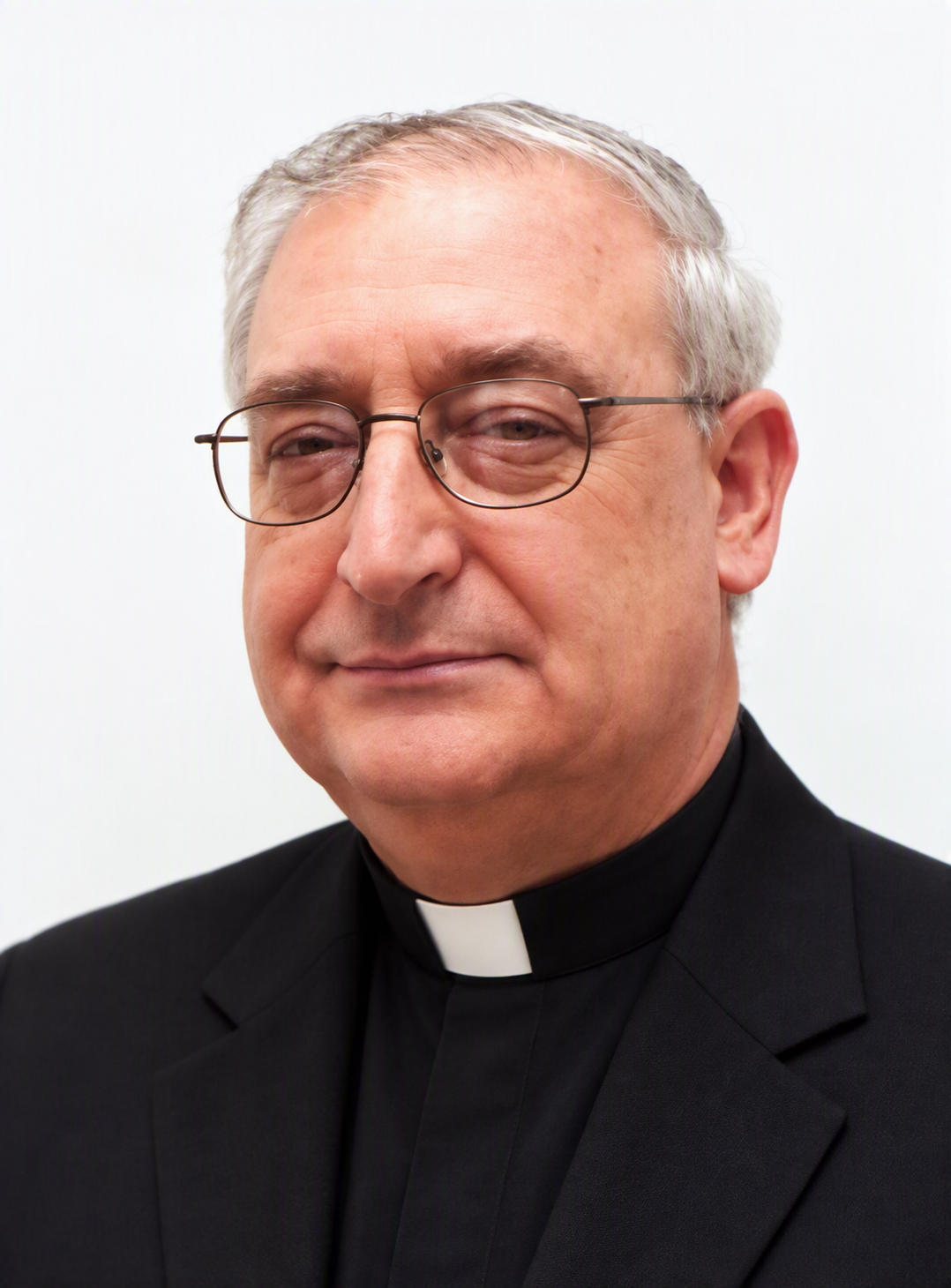
Father Miguel Piscopo, OSJ, is a member of the Oblates of Saint Joseph (OSJ). He served as Superior General of the Congregation from 2012 to 2018.
Both before and after his tenure as Superior General, he has held key positions, including that of General Assistant for Youth Ministry, where he promoted the so-called "Marelli-an values"—inspired by the order’s founder, Saint Joseph Marello.
His spiritual teaching is firmly rooted in the Josephite charism. Father Piscopo encourages the imitation of Saint Joseph as a model of interior life, prudence, composure in the face of adversity, and quiet service to the Church and one’s neighbor.
The Imprint of God in the History of
The Oblates of Saint Joseph
Introduction
Dear confreres of Mexico and El Salvador, dear laypeople, who are living, along with the Oblates of Saint Joseph, the Josephite-Marellian spirituality. Thank you for inviting me to this important celebration of the 75 years of the presence of the Sons of Marello in this lovely and dear land of Mexico and El Salvador. Since the Oblates arrived here, 75 years ago, they were guided by the Holy Spirit, orienting their steps and their commitment in the Evangelization and in the human Promotion, placing themselves with enthusiasm and care to serve God’s people. With great satisfaction, I can see, that the Oblates of today are still following the impulses of the Holy Spirit, evangelizing and humanly promoting the people around them. This fills my heart with joy. Today, I want to solemnly appreciate everyone and each one of you, Josephite-Marellian religious and laypeople, for your faith, testimony and passion in your Christian experience. Thank you for your existence. All of you together (religious, priests and laypeople) are part of the lovely Josephite-Marellian family of the Province of Mexico. This Province was born from the missionary heart of the Oblates coming from California, which later became missionary in the land of El Salvador. Everything is a project of God.
Biblical Reflection
I want to propose 3 Gospel quotes that, undoubtedly, have iluminated and continue iluminating the life of the Oblates and of the Devoted united to them.
A. The Visitation of Mary to Elizabeth (Lc 1:39)
Mary, laywoman, was chosen by God to be co-protagonist of the Plan of Salvation. Then God chose another layperson, Joseph, the carpenter, as a second co-protagonist. Jesus is the first one, the real protagonist of this Plan. When the Virgen accepted God’s will, she got pregnant of the Son of God, who was forming within her. The presence of Jesus in her opened the eyes of her heart. Once she knew her cousin Elizabeth was in need of help, she immediately set out on a journey of 5 days, without considering the danger a young woman would face. Mary is the icon of a missionary. This is a baptised person, who has Jesus in her heart, a living Jesus, that pushes her to put oneself at the service of others. The Lord makes the desire grow in him, the willingness to announce it and to help the needed. There are two categories of missionaries: those who leave their homeland and go far (and this is the experience I had for 21 years). As well as others, that stay in their homeland, in their cities and in their parish community. These missonaries are the great majority in the church. The first Oblates that arrived to this holy land had a living Jesus in their lives, a Jesus that sent them far to evangelize. Likewise today, the members of the Josephite-Marellian family should have a JESUS in their hearts and devote oneself to the evangelization and the human promotion.
B. «He called them TO BE with Him and also to send them to PREACH» (Mc 3,14)
These words of Jesus are part of the story of the choice of the Apostles and present the priority of the following of the Messiah: first “Be with Jesus”, and then, as a consequence, “Engage in the apostolate”. These words can be applied to all of the baptized, not only to the priests. The primacy of God and of the spiritual life is not an option for us, rather it constitutes the primary support of the life of the devout. We are Christians to the extent that we are united to God. This means: live the experience of God; abandon your own life in his hands; be like the clay in the potter´s hands. We have to continuously convert the heart, moving away from us everything that is unworthy for a baptized person. To be with Jesus is not to give into the temptation of losing the unnegotiable values of the Gospel. When we get close to God, he pushes us more toward others. We were chosen by God to be the builders of the Kingdom, to cultivate the hunger and the thirst of justice and fraternity in the society. But all of this will be posible if we nourish within ourselves, like Saint Joseph Marello taught us in the «intimacy with Jesus», like the carpenter of Nazareth did. The first Oblate missionaries lived all of this and the Oblates and laypeople of today should continue living it.
C. “Therefore, go and MAKE disciples of all nations, BAPTIZING THEM in the name of the Father and of the Son and of the Holy Spirit; TEACHING THEM to conserve all that I have commanded you”. (Mt.28, 19-20).
Before ascending to heaven, Jesus gave this very clear order, to his apostles and his successors:
Ø GO = He sends us to the world, to the society. We cannot stay stalled against the walls of our houses or our parishes. We have to go out to the closed ecclesial structures and go to the human, geographical, social, cultural and economical peripheries; like the great Pope Francis said. A Christian in the world should be distinct and different to the others, but not distant to the people. We need to be in the world, participating in its history and its battles for a better society, without letting ourselves be enslaved by those who only pursue their personal interests. We need to heal and humanize the society. Today, more than ever, we need missionaries; people that do not enclose themselves up in their own town or country, people who are brave and passionate about life, that do not fear facing sacrifice and difficulties and that fight for a dignified life for all, where no one goes hungry; everyone will have a home and a job.
Ø MAKE DISCIPLES OF ALL NATIONS. not with sermons, but rather with examples of your own life of faith, of justice and honesty; with small concrete day-to-day gestures, being aware that there are people that do not know Jesus or have no interest in Jesus and his Gospel.
Ø BAPTIZING THEM. The church, by its nature, is missionary and in the Baptism we all become missionaries. We have all been chosen to be witnesses of Jesus amidst a world that is sometimes hostile. We are «salt and light» of society. And we will be if we have the same passion that Jesus had in his heart. The same ardor of Jesus should burn in our hearts.
Ø TEACHING THEM TO CONSERVE ALL THAT I HAVE COMMANDED We must spread the Good News of the Gospel, presenting the true face of God, which is of a good Father, who loves us like a mother. We must spread the Good News that we are all brothers and sisters and we should help each other. We all know the many contradictions that exist between the lifestyle of the world and that of the Gospel. That is why Jesus chose us in the baptism to be witnesses in the amidst of a complicated and difficult world. We, the baptized, must present to the people who are distant to God and to the church, the new evangelical lifestyle (humble, poor, non-violent, in solidarity). We cannot remain dormant in front of a world submissive to selfishness and arrogance, and to unfair structures, that generate more injustice, violence and death. We must build the Kingdom of God, here on earth, in the light of the Gospel. As Saint Joseph Marello teaches us, all of this will be possible, to live in intimacy with Jesus and to serve His interests.
The Missionary Nature of the Oblates of Saint Joseph
S. Joseph Marello, in a letter sent to a priest friend Stefano Delaude, says, “Here, then, is our mission: to make known, to foster love for, and to encourage the practice of the Doctrine of Jesus Christ”. The founder was proposing a solution to the problems of the society, which is to preach Jesus Christ, to make his doctrine known and lived. This, indeed, is the heart of the mission: the person and the teaching of Jesus Christ.
The Young bishop Joseph Marello dedicated his last 7th Pastoral Letter to the topic of Missionary Nature. He starts saying that Jesus wanted his apostles to continue his predication in all the world, calmly confronting all of the difficulties of the mission, without expecting miraculous interventions from Heaven. In this letter, he manifests his preocupation about the men who in the world are distant from the Gospel, victims of the evil and live without the light of faith. In addition, it demonstrates a firm sensibility towards women affirming that in many places, where the Gospel is not present, they had no right to freedom and were submissive to men, who sometimes mistreated them. For the Young Bishop of Acqui, the missionary work was important in a spiritual level as well as in a social one. That is why, he encourages the diocesan community to accompany the missionaries with their prayers and donations. For him, it was an important responsibility of the baptized person to somehow cooperate in the difussion of the Gospel. His sons, the Oblates, have in their DNA the task to heal the “interests of Jesus”, which, “day by day the Providence points out”. This is knowing how to read the signs of our times. We know, the first mission of the church is the “Evangelization”, proclaming the Good News of the Plan of Salvation, which was born in the heart of God. Jesus came to set men free from the oppressive structures of sin and to teach us, through the Gospel, a new lifestyle in the society. And the second mission of the church, strongly tied to the first one is the “Human Promotion”. In other words, the search of the integral development of the person: in respect, in justice, in freedom, in democracy and in non-violence. All of this is explained in the Social Doctrine of the Church. The sons of Marello started being missionaries in Italy, in the region of Piamonte, offering their service to the Diocese; conducting oratories for the youth, supporing parish priests in preaching, confessions and spiritual direction; animating communities without a priest; organizing catechesis and liturgies; repairing abandoned ecclesial structures. The Divine Providence wanted the Congregation to open its doors and leave Italy, watching from afar the universal Church, where it was more urgent to take Jesus. And continuing with the loyalty of its identity, the Oblates began to confront the challenges of the Evangelization in places of great material and spiritual precariousness, in situations that had challenges and sometimes persecutions. That is how in 1915, the sons of Marello went to live and teach the Gospel in the Philippines, where they began to write a new and heroic page in history. Little by little, they began to be present in Latin America, Asia, Africa, Oceania and Europe. Today, we are present in 16 countries, always among ordinary people, with more human values.
The Rules of the Oblates of Saint Joseph
clearly specify the style of the Missionary Nature of Marello.
• “Christ has come among the men so they can have life” (C59), the OSJ is a life generator
• “God calls some baptized for the mission, among them are the Oblates of Saint Joseph” (59), the OSJ is one chosen of God
• “Saint Joseph Marello wanted the Oblates to take Christ to the world according to his model of Saint Joseph, who was the first one on earth to take care of the interests of Jesus” (C59), the OSJ is an apostle who lives in the middle of the village and has as its model Saint Joseph.
• “The Obates choose to serve the church in activities and in humble places, feeling happy to do the most simple and ordinary tasks with extraordinary love.” (C60), the OSJ work with humility and availability in the most simple tasks
• “The missionary oblates respect the culture, its practices and customs, social conditions and mentality of the people, whom the live with. Learn the language, share their reality” (C62), the OSJ have to touch the human, historical and cultural heart of the people.
• “The church has the mission to save man in his integral dignity. Therefore, it corresponds to the church to give its own judgment about topics of social matters, when the fundamental rights of the human person demand it”, the OSJ, the human rights defender
• “The Oblates reaffirm the importance of the Social doctrine of the church, as an integral part of the Christian conception of life and it strives to translate it into operational efforts” (C66), the OSJ live and follow the principles of the Social Doctrine of the Church
• Inspired in the Founder, who was sensible to the needs of his time, the Oblates, who accepted new places of work, chose by preference the villages with more needs of announcing the faith or helping them preserve and conserve it” (C78), the OSJ is called to live among the poor, not only of an economical level but of a poor moral level.
• “S. Joseph Marello preached the Gospel not only announcing Jesus, but also with an active preocupation about the human and social development of its people. Following the example of the Founder and the teachings of the Church, the Oblates are conscious that they cannot integrally proclaim the Gospel without worrying with a keen sensitivity also about the human development in justice and in truth, convinced that the consecration does not make them distant from people or useless for the society” (C79), the OSJ committed to establish love, fraternity and non-violence in the world.
• The Oblates gladly develop the pastoral labor in the peripheries, in other words, in favor of the people with major difficulties and in situations of major necessity: the marginalized, the immigrants, people and villages victims of the social exclusion and of a throwaway culture, especially minors, victims of abandonment and of violence, etc., recognizing in these persons the highest dignity of the sons of God. The Oblates facilitating with their presence and work the solution of their severe problems, acting in a way that these persons are the protagonists of their human promotion” (R37), The OSJ collaborates in the establishment of social justice in the world.
• “The Oblates assume and promote the initiatives of the social pastoral found in the pontifical documents and of the Episcopal Conferences” (R 38), the OSJ follows the pastoral guidelines of the Church.
BRIEF HISTORY OF THE MEXICAN PROVINCE
FROM 1950 TO 1962
1950 – PREPARATIONS FOR THE OPENING OF
THE MISSION IN MEXICO
The Oblate Province of California always developed a beautiful evangelized missionary apostolate and of human promotion with the Mexican immigrants and of all Latinamerica, learning to speak Spanish and familiarizing with the customs and the culture of the different communities, especially the Mexican. That is why the Fathers Silvio Masante and Giorgio Marenco, from the Province of North America, sent by the Rector Major and to support of the Provincial Vicar, traveled to Mexico from October 8th to the 15th of 1950. They first visited the Apostolic Delegate and the Archbishop of the City of Mexico. Then, they saw the Bishop of San Andes-Tehuantepec, who showed them the places that he planned to entrust to them. They also visited the Bishops of Jalapa, Oaxaca, Monterrey and Huajuapan. Everyone welcomed them with open arms. The Archbishop of Monterrey had insisted that the Oblates were to settle in his diocese. Fathers Masante and Marengo had a very positive impression and were very enthusiastic for the great opportunities given to the Congregation in Mexico, especially in view of numerous vocations. On October 26th of 1950, each one of them wrote to the Rector Major informing him of the possibility of establishing the Congregation in Mexico.
Father Marenco specified that, in the first place, due to several logistical and financial reasons, they should accept a parish in the great city of Monterrey, and later they could accept one in Tehuantepec. To conclude his letter, he wrote; «I consider my duty to emphasize that Mexico presents itself as a vast and magnificent field of ministry and vocations, where the Congregation can give great glory to God and, at the same time, find material resources to carry out their work with ease».
Father Masante. concluded in his letter, like this: «In a meeting of the Council of California, convened by Father Buttini, we were all enthusiastic and we agreed not to miss the marvaleous opportunity to open a field for our dear Congregation in Mexico. Fathers Marenco and Mazzucco offered themselves to immediately leave to settle there. For us, it represents a great sacrifice of staff, but we think that it is for the greater good of our dear Congregation». Turning down this offer in Mexico seems like almost a crime against the souls and against the Congregation». Along with both letters, a note from the Apostolic Delegate in Mexico Monsignor Guglielmo Piani was included, which expressed his most sincere congratulations for the project and thanked the Oblates of Saint Joseph for the good they had done and will continue doing in the Philippines. (Monsignor Piani had been an Apostolic Delegate in the Philippines and had maintained a close relationship with the Oblates). In addition to his blessing, the Apostolic Delegate assured them «a place in Mexico City for a seminary for vocations». So on November 14th of 1950, the Oblates of California presented an official and urgent request to the Rector Major Father Luis Rosso so that a branch office of the Congregation in Mexico could be opened in the city of Monterrey, explaining the reasons and expressing his hope for a favorable decision.
1951 – THE INITIATION OF THE MISSION
On November 8th of 1951, the Superior Council of Asti examined the request of the opening of the Mission of Mexico. The Rector Major gave his permission, he added that the confreres of the United States had to send staff, because from Italy no one could be sent. In California, they started to get ready with enthusiasm for this new apostolic challenge. During the month of August, Father Silvio Masante visited Monterrey, where the first Oblate community was going to be established. The Apostolic Delegate accompanied him, Monsignor Guglielmo Piani. They also visited the Mezquital region, where the Delegate had planned to establish a Prelature and entrust it to the Oblates. On August 25th, Father Masante sent a letter to the Superior Council presenting the proposal of the Apostolic Delegate to entrust to the Oblates a mission in the Mezquital region in the state of Hidalgo, which is between 1.700 to 2.100 meters high, about 200 km from the capital; connected by highways, with electricity and telephone service. With a population of about 75,000 inhabitants of the “Otomi ethnicity”, distributed in nine parishes with beautiful churches and parish houses. There were two major centers with churches like «real cathedrals» and parish houses which were «real convents». Father Masante was enthusiastic. The weather was excellent and the religious and civil authorities offered great support. Initially, six priests were sufficient, three for each major center. Though, California could only send three Oblates. The Archbishop of the City of Mexico and the Bishop of Tulacingo, whom the territory belonged to, were willing, when there was an adequate number of missionaries, at least ten or twelve, to convert it into an independent Mission, with the request to the Pope to create a Territorial Prelature. While the possibility of a Territorial Prelature was being considered, on September 14th, the Archbishop of Monterrey signed the agreement for the acceptance of a parish in this city, considering the perspective established by Monsignor Piani, the previous year, at the start of the project for a Mission in Mexico, of “a place to establish a Seminary and as a center for revenue and vocations”. On September 17th, the Apostolic Delegate requested the Rector Major a response, which arrived a month later: «The offer of a “Territorial Prelature”, with nine parishes and several chapels in Mexico, will be examined. It will only be accepted if the Oblates of North America provide a good Superior to preside over this mission». The Council was considering Father Silvio Masante. The farewell for the two new missionaries for Mexico in the Tomales Novitiate was Sunday, on November 4th, in California, with the presentation of the crucifixes and the participation of the confreres, the novices and many faithful. On November 12th of 1951, the two Fathers began to live in Monterrey, a city of about 400,000 inhabitants, in the state of Nuevo Leon, in the northeast of Mexico; a little more tan 900 km north to the City of Mexico. It was a Metropolitan Archdiocese and the third largest city and most important city of the country. The parish entrusted to the Oblates of Saint Joseph, with the chapel of the “Temple of the Holy Spirit” and the parish house, had approximately 20,000 habitants. It was in the north side and in the modern part of the city, and it included the area known as “Colonia Anahuac”, “Colonia Chapultepec”, “Colonia Topo Chico” and the university campus. The enthusiasm among the brothers of Pennsylvania was high, so much that the Fathers Tulio Brida and Bronius Kaunas expressed their willingness to go to Mexico. On December 20th, the Superior Council considered the convinience to accept the proposal of the Apostolic Delegate about a future “Territorial Prelature” in Mezquital, but there were still some uncertainties, especially regarding availability of the staff that would be assigned. The Major Rector, Father Luis Rosso sent a letter to Monsignor Piani without taking a concrete decision.
1952 – THE FIRST STEPS OF THE MISSION OF MEXICO
Fathers Silvio Masante and Vincenzo Mazzucco had awakened such enthusiasm and cooperation among the people that on March 19th, the construction of the great parish church began, the Temple of the Holy Spirit”, which was expected to be concluded by Christmas. The cost of the construction was above 90 million lire. Father Masante said that “until now there has been no lack of funds and everything indicates that there will be no shortage of them”. On April 4th, since the Apostolic Delegate had not received any news from the Superiors about the Mission in Mezquital and the possible Apostolic Prelature or Prefecture, he sent the following telegram to Asti: “Please, respond about the Mezquital Mission”. The same day, the Rector Major responded: «I have a great desire to accept this invitation, which is so strongly backed by our Fathers of North America. I am almost sure that it can be successful, I pray and I ask others to pray for this intention. I ask you to wait several weeks more to give further consideration for the best selection of the staff». Father Luigi Rosso was considering in sending an Oblate to Mexico from the Philippines. Monsignor Piani responded the Superior manifesting his “profound satisfaction and gratitud”, and asked to send the soonest possible at least the Fathers of California appointed to Mezquital, “this way they could immediately take possession of the region entrusted to their apostolate and prepare everything needed for the arrival of the other confreres”. On May 2nd, the Rector Major wrote to Father Silvio Masante saying that Monsignor Piani had already received the response that “we are willing to accept the proposal that you made and that four priests would be arriving shortly, so that he could take charge of the direction of this new work”. In July, Father Masante sent Rector Major, the agreement that was signed on June 28th in the City of Mexico by the Archbishop Luis María Martínez y Rodríguez, the Bishop of Tulancingo, Monsignor Miguel Darío Miranda y Gómez, and Father Masante himself. This is a summary of the content of this agreement: the Oblates take responsibility of 8 parishes in the zone of Mezquital of the State of Hidalgo; 6 in the Archdiocese of the City of Mexico and 2 in the Diocese of Tulancingo. In addition, a request will be made to the Holy See to establish this zone as the Apostolic Vicariate; that within six months the Congregation will send at least six missionaries. In the end, when the Oblate Missionaries reach the quantity of twenty religious men, the Archbishop of the City of Mexico and the Bishop of Tulancingo will proceed to the Holy See, through an Apostolic Delegate, with the procedures for the establishment of the Mezquital as a Prelature. During the 6th General Chapter of the Congregation, which took place in Asti in the month of August of 1952, Father Masante presented a very positive report about the situation of the Mission in Monterrey, saying that: “This zone includes an area of approximately 35 km route, with nine parishes and 250 churches and chapels, with a population of 100,000 souls. It has an ideal weather (people say that it is the best of Mexico) and it is crossed by three roads, which facilitates communication very much”. Then, he presented the Agreement and the project of the future Apostolic Vicariate, with a view to becoming a Prelature Apostolic. Everything was a positive and enthusiastic description, but the difficulties and related problems with the staff and high load of work were not mentioned. In Mexico, we were waiting for the new missionaries to Mezquital, while Father Masante and Father Mazzucco are still in charge of the Parish in the Temple of the Holy Spirit in Monterrey and are preparing the arrival of the confreres. Meanwhile, the first candidate for the priesthood, the young León Emmanuel arrived from Mexico on September 10th, and was admitted to the novitiate of Tomales (California), along with five new novices.
1953
Thanks to the work and enthusiasm of the Fathers Masante and Mazzucco the construction of the House and Temple of the Parish Holy Spirit in Monterrey was advancing properly. Everyone was awaiting compliance to the Convention with the Bishops for our presence in the Mezquital. The first missionary arrived on January 31st, Father Alberto Libardoni, coming from Peru, who spoke Spanish very well and had experience of the missionary life. He was going to be in charge of the parishes of Alfajayucan and latter the one of Miquilpa. Four other Oblates arrived later: Father Serafino Bortolotti, from Bolivia, Father Pío Stefani, Father Albino Ferrarotti and Father Giovanni Stramare. It was not possible to send more brothers. Consequently, due to the fact that there were not sufficient priests, neither the Apostolic Vicariate nor the Prelature were established. At the end of 1953, the Mexican Mission, led by the pioneers Father Silvio Masante as the Superior and Vincenzo Mazzucco as the Administrator had 7 priests, four houses and 9 parishes.
1) Monterrey with Father Masante as the parish priest, Father Mazzucco as the parochial vicar and Father Stefani as the parochial vicar and music professor at the "Ciudad de los Niños".
2) Ixmiquilpan with Father Libardoni as the parish priest and Father Ferrarotti as the Pro-Rector and Administrator
3) Huichapan with Father Bortolotti as the parish priest and Vicar Forane;
4) Alfajayucan with Father Stramare as the parish priest.
The Oblates in the Mezquital served approximately 75,000 Indigenous people. Besides, six other vacant parishes (Tasquillo, Chapantengo, Lagunilla, Tepetitlán, Tecozuatla and Chilcuautla).
1954
The Oblates of Mexico did not get tired of requesting reinforcements. In this sense, the Apostolic Delegate wrote to the Superiors regretting the lack of a Superior responsible of the Oblates in the Mezquital and he did not further mention the initial plan of a Prelature, because he did not have enough priests. The superior of the Mission, Father Silvio Masante, was very busy with the pastoral work and with the completion of the construction of the new and great church. And on March 19th, even though it was not completely finished, the temple began to function. The positive aspect was that the number of vocations began to grow little by little. Indeed, the young Emmanuel León, candidate for the priesthood, and Ricardo Benavides, aspirant to the status of Coadjutor Brother, were in the Novitiate of Tomales (California). The Bishop of the diocese of Tulancingo, which the parishes of the Oblates belonged to, organized the Marian Year in his Diocese, with celebrations of five marian Conferences. He chose the Oblate parish of Ixmiquilpan as the venue of the first one which took place October 15th and 16th. All of the Oblates of Mezquital helped the parish priest Father Alberto Libardoni so that everything would go well. The preparation, lasted three weeks. It involved the entire city, even the civil authorities who were reluctant to attend the religious events. Everyone participated with great enthusiasm. The diocesan bishop and the auxiliary bishop of the City of Mexico were welcomed with great joy in the various celebrations: religious services, rosaries, conferences and a great closing procession. The faithful attended in great number to the event, especially to the mass, the confessions and the communions. The Bishops «praised the work done by the Josephite Fathers of Mezquital; but pointed out the reduced number of priests in comparison to the immense scope of work. They expressed the hope that soon other missionaries equally zealous and eager to work in this desolate vineyard of the Lord arrived».
1955
The Oblates did an arduous task in the vast territory, in Monterrey and above all, due to the major religious, social and economical difficulties, in Mezquital. Their apostolate was praised by everyone, including the Italian Catholic Federation of California. In addition, the number of the first Mexican Oblates was increasing: Brother coadjutor Richard Benavides returned to Mexico in March, after his novitiate and his first profession of religious vows. While the seminarian Emmanuel León was studying his first year in the Philosofical Seminary in Pittston; the young students Ezequiel Barragán and Juan José Pérez were beginning their novitiate in Tomales. Unfortunately, Father Serafino Bortolotti, parish priest of Huichapan, decided to leave the Congregation in October and was incardinated first in the Archdiocese of the City of Mexico and was later received definitely in the Metropolitan Archdiocese of Santa Fe in New México. In the beginning of 1955, Father Alberto Libardoni admitted two of the Hermanitas de Jesús of Father Charles de Foucauld. They were established in the village of Orizabita, the poorest zone of Mezquital. At the end of 1955, Father Vincenzo Mazzucco, who had begun the Mission in Mexico along with Father Silvio Masante in Monterrey returned to California and dedicated himself to the Italians of the city of Sacramento.
1956
In March, the Major Rector, Father Luigi Rosso, along with Father Buttini, Provincial Delegate, carried out the Canonical Visitation to the confreres in Mexico. They stayed a few days in Monterrey and later traveled to Mezquital. They met with the Oblates in Ixmiquilpan to preach a Spiritual Retreat, before that they visited all of the communities. Then, the Mayor Rector returned to Monterrey to carry out the Canonical Visitation to the community. The morning of January 15th, the 25th priestly anniversary of Father Silvio Masante was celebrated, who presided over the Solemn Jubilee Mass, followed by a reception in the parish hall organized by the parishioners and their admirers. In the afternoon, the Metropolitan Archbishop of Monterrey arrived to perform the rite of blessing of the great and artistic Temple of the Holy Spirit. As well as the participation of all the confreres that work in Mexico. At the end of the day, several hundred devoted people of the parish offered a dinner to honor Father Masante, the Archbishop and the Mayor Rector in a restaurante of the city. A great photograph of the Bishop Marello stood out at the far end of the room. Two days later, the Major Rector left Mexico for California. Going back to Italy, the Major Rector, in a reunion of the Superior Council, spoke about the Mission of Mexico, describing it as «beautiful» and with «good communication» between the three residences and the City of Mexico. He added that the few priests were «very busy» and worked «with great enthusiasm and apostolic zeal». For him, that Mission had a future; but it was necessary to increase the staff «before the ones who were there would get exhausted». The Council was favorable about this young Mission and coincided in the need to rapidly increment the staff. But during this year, unfortunately, there were two defections: Father Serafino Bortolotti decided to live outside of the Congregation and the coadjutor brother Richard Benavides, voluntarily left the family of the Oblates. And that is how the staff of the Mission was reduced to five priests: one in the great parish of the Holy Spirit in Monterrey and four in the Valle del Mexquital, in three communities: Ixmiquilpan, Huichapan and Alfajayucan and nine parishes with a total population of over 75,000 inhabitants. Though reduced to five, the sons of Marello continued their apostolate, having faith in the promise of the Superiors to promptly send more fellow priests. In Monterrey, besides the pastoral care, they were expecting to awaken the interests of the wealthy catholics for the construction work in Mezquital, and invite and form young aspirants to the religious and priestly life in the Congregation. Meanwhile Father Alberto Libardoni, parish priests of Ixmiquilpan, traveled to Italy to visit his mother, who was now alone and to rest, after a long and exhausting apostolate like a missionary, first in Peru and later in Mezquital. He had been away from Italy since 1948. When he returned to Mexico, he brought his mother to live with him. Yet, the Mission offered good hopes regarding vocations. In the Philosophical Seminary of Pittston, the seminarian Emmanuel León was doing his second year and in Tomales there were two novices, Ezequiel Barragán and Juan José Pérez. In Monterrey, Father Masante had finally established a seminary in the House with eight young students, who aspired to a religious life and to priesthood, thereby carrying out the project that had begun since 1950, in the beginning of the Mission in Mexico.
1957
The Major Rector, to fulfill his promise of sending new missionaries, on February 23rd, in the Sanctuary of Asti, handed over the crucifixes to three new missonaries for Mexico: Father Emilio Tunesi, younger brother of Father Enrico, missionary in the Philippines, Father Leonardo Prota, (both priests for less than two years), and Father Saverio Galler, priest for less that one year. The following day, Father Prota and Father Galler set out from Genoa by steamship. While Father Tunesi left several days latter, on March 6th. They were received with great enthusiasm by the Superior of the Mission, Father Silvio Masante and Father Vincenzo Mazzucco (who had returned to Monterrey). On March 16th, they arrived to Mezquital: Father Galler, along with Father Alberto Libardoni stopped in Ixmilquipan; Father Prota along with Father Pío Stefani in Huichapan; and Father Tunesi along with Father Giovanni Stramare in Alfajayucan. The Mexican Mission now had eight Oblates: two in Monterrey and six in Mexquital. A little after his arrival to Mexico, Father Prota, in Huichapan, founded the Boy Scouts and the Girl Guides and informed Italy about the path of the Mission in his articles titled «In the Valley of the Mezquital», published in the Congregation's newsletter, the Joseph.
1958
On August 12th, the new Apostolic Delegate of Mexico, Monsignor Luigi Raimondi, of Acqui, arrived to the Mother House and met with the Superiors and, after expressing his admiration and satisfaction for the work of the Oblates in Valley of the Mezquital, asked for the reinforcement of other fellow brothers because it was “urgent to send other missionaries” in the vast región of Mezquital, praying “to take this matter seriously and submit this pressing necessity to the consideration of the most Reverend Chapter Fathers”. In Asti, the General Chapter met and as a representative of the Mission, Father Pio Stefani was sent, who read the written report of the Oblates of Mexico, asking to be granted independence of the United States as a real mission, due to the linguistic and cultural difficulties, and distance. Simultaneously, asked for the staff urgency and “that the Superior of the Mission live in the Mezquital, where the largest nucleus of Fathers is and his presence is more urgent and necessary because in a distance of 900 km it is not possible to govern and direct a Mission”. After the Chapter, the Superior Council summoned Father Stefani, who insisted on the necessity of another staff, due to the great apostolic work the other Oblates were doing. The Council assured «that they would help as much as possible». In the month of September, the Superior Council declared Mexico as a Regional Delegation, naming Father Alberto Libardoni as a Delegate and Fathers Silvio Masante and Giovanni Stramare, who was also a Treasurer of the Delegation, as consultants.
Even though there was a scarcity of priests, the new Delegation was dedicated to the vocations.
• In the Seminary of Monterrey, led by the Prefect, Father Saverio Galler, more than 12 junior seminarians studied there.
• Two seminarians, Ezequiel Barragán and Juan José Pérez, students of Philosophy, in the Archdiocese Seminary “Saint Joseph of the Mountain” in Morelia, the capital of the state of Michoacan, 830 kms from Monterrey.
• In the Novitiate of Tomales, in California, there were three Mexican novices.
• And in the Philosophical Student Body of Pittston (USA), the seminarian Emmanuel León was finishing his studies of philosophy.
Meanwhile Father Leobardo Prota, planned a “School of Arts and Trades” for the indigenous otomíes of the Valley of Mezquital. The plan consisted in training young boys in carpentry, cabinetmaking, shoemaking and agriculture; and young girls in sewing, cooking, home economics, typing, etc. A boarding school for students was also projected. The project was big and ambitious compared to the real possibilities of resources and staff. It is worth adding that the government, laypeople and anticlerical, opposed any work supported by the Church. The absence of resources, staff and political motives caused the project to be abandoned.
1959
When the VII General Chapter of 1958 decided to divide the North American Mission in two Regional Delegations of California and Pennsylvania, the Fathers Silvio Masante and Vincenzo Mazzucco had to return to California. The new Council of the Regional Delegation of Mexico had to think in new appointments and transfers of the Oblates. Father Giovanni Stramare took Father Masante’s place as the first Consultant and Treasurer of the Delegation and Father Enrico Tunesi was named the second Consultant of the Delegation. This was composed of 5 communities: one in Monterrey and four in the Mezquital, which we know was an arid place, with few resources, synonymous with the most abject poverty. The inhabitants were increasing, they came to be 85,000 people, the majority only spoke their otomi dialect, in an area of approximately 3,000 square kilometers. The pastoral activity consisted in preserving the faith along with the real evangelization and the civil development. This was the new distribution of the staff:
• The Delegate Father Alberto Libardoni, parish priest in Ixmiquilpan and to help him, newly professed Coadjutor Brother José Oscar Picasso, who had just arrived from the novitiate of Tomales in California. But after approximately a year, Picasso left the Congregation and returned to his family.
• In Huichapan, the new parish priest was Father Giovanni Stramare,
• In Alfajayucan, Father Emilio Tunesi.
• This year the House in Tasquillo was opened, the parish priest was Father Leonardo Prota, who was also in charge of the “Cultural Missions of the Valley of the Mexquital”.
• In Monterrey Father Enrico Tunesi was named the parish priest with the help of Father Saverio Galler.
Consequently, the new Mexican Delegation only had seven Oblates. For this reason, the new Major Rector, Father Pietro Magnone, wrote with sadness: «Mexico is a problem. The Superior keeps begging “on his knees”. The local bishop, upon seeing the precarious situation of our fathers, ended up sending an auxiliary priest to a parish under our care. Besides, they are convinced that in the past they made formal promises to send staff, so now they do not seem to be keeping their word either». In the month of September, three Mexican seminarians arrived to Italy to study in the new International Student Body of Rome: the Brothers Ezequiel Barragán, Emanuel León and Father José Pérez. It was an enormous and exhausting task for the few Oblates, so much that the Major Rector, Father Pietro Magnone, and his Consultant, since they did not have available priests, sent the theologist seminarian Mario Tesio to Monterrey, who resumed his studies of the third year of Theology in the Archdiocese Seminary of Morelia.
1960
Father Alberto Libardoni, besides being Delegate and parish priest of Ixmiquilpan, had to also take responsibility of the parish of Tasquillo. Father Pío Stefani, besides being responsible of the parish of Huichapan, he also took the one of Nopala. Some problems soon arose: Father Pío Stefani and Father Leonardo Prota were not well and started to live independently. Due to this, the Major Rector sent, at the end of May, the Delegate of California, Father Domenico Albertelli, as a visitor to Mexico. After seeing the precarious situation of our brothers, the local bishop ended up sending a coadjutor of the clergy diocese to one of our parishes. On July 24th, the archbishop Miguel Darío Miranda y Gómez of the City of Mexico visited the General House in Rome. To the superiors, he spoke about the need of incrementing the missionary presence in the Valley of Mezquital. The archbishop Miranda knew the congregation well and the situation in Mezquital, for he had been bishop of Tulancingo. At the end of the year, Father Angelo Degano incorporated to the Delegation. Another consequence of the difficult situation of the Delegation, due to the scarcity of staff, was that the Seminary of the young seminarians did not exist anymore in Monterrey. Nevertheless, there were six Mexican seminarian students: in the Seminary of the Archdiocesan of Morelia; two philosophy seminarians and Father Mario Tesio of the third course of Theology, and in Rome three Mexican seminarians of the first course of Theology.
1961
In the month of February, the Pope created the new Diocese of Tula, and three religious communities of the Valley of Mezquital were transferred from the old Diocese of Tulancingo to the new Diocese of Tula. Father Pío Stefani remained as the parochial vicar in Huichapan, given that the parish of Nopala transferred to the diocesan clergy. As the end of the term of Father Libardoni as a Delegate of three years approaches, he appeared reluctant to accept the confirmation as a Delegate, proposed by his brothers and Superiors, due to personal and pastoral reasons. Meanwhile, in his meeting of August 2nd, the Superior Council of Asti authorized Father Libardoni to receive the religious vows of the seminarian students in Mexico. On June 30th, the Major Rector, Father Pietro Magnone, did the Canonical Visitation in Mexico to all of the Oblates communities. During this visit, the seminarian Mario Tesio, student of fourth year of theology, was ordained priest in Ixmiquilpan. But due to his priestly ordination, he was obligated (was set off) to abandon Mexico due to the state laws that prohibit foreigners to be ordained as priests in the country. Father Tesio went to work in Brasil, in the Oblate Seminary of Ourinhos as a Prefect and Teacher.
1962
There were eight Oblate priests in four houses in early 1962. And in the meeting of the Superior Council about Mexico, celebrated on March 27th of 1962, it was decided to ask the Delegate Father Alberto Libardoni «to continue in office until a new election». This remained until June 12th, when the Superior Council confirmed the Council of the anterior Delegation for the following three years. Father Libardoni continued as the Delegate with Father Giovanni Stramare as the First Counselor and Treasurer, and Father Enrico Tunesi as Second Counselor. Father Pio Stefani also continued as Secretary of the Delegation. In the same meeting of June 12th, the Superior Council, in the care of Father Leonardo Prota, analized the problem of the Cultural Missions of the Valley of Mexquital in Huichapan. The acts of this meeting say: «We examined the situation, quite precarious – and a bit unclear-, of the Mission of Mezquital, which is supervised by Father Leonardo Prota. There exists the risk that we have to work and end up empty handed, given that the property is still in hands of the Bishop and we are responsible of the administration. The Council asks the Council of the Delegation to clear up this matter with the Bishop and later inform him». The Mission was doing assistence activities and training, especially for young people. As a result of the intervention of the Superior Council, the Work had to be abandoned. Then Father Prota left Mexico and went to Braxil. In October, Father Delegate Alberto Libardoni arrived to Italy to rest and stayed at the General House to meet with the Superiors and the Mexican student seminarians. This year two seminarians started their studies in the Seminary of Morelia: Giovanni Landaverde, student of first year of Theology and Ernesto Callejas, student of the third year of Philosophy. And on September 30th, they arrived to Rome to the International Oblate Seminary of Rome, to continue their theological training and studies.
CONCLUSION
Dear confreres and dear Laypeople bounded to our Spirituality and Charisma; this brief historical moment we have walked through clearly demonstrates how the initiation and the successive steps of this beautiful Mexican Province have been work of the Holy Spirit and guided by Him. Cheer up, cheer up, you are spiritual sons of the missionaries and you have to be missionaries today, Religious and Laypeople. Today the Holy Spirit also wants to continue evangelizing and humanly promoting through your lives and your testimonies. Do not ever forget: you are sons of the missionaries and you have to continue their work which the predecessors started.
LET ME, DEAR CONFRERES AND LAYPEOPLE, GIVE 5
MANDATES FOR THIS 75TH ANNIVERSARY
1. The primacy of the prayer in your lives.
If you do not get on your knees everyday to pray and participate of the sacramental life of the Church, the Spirit of Jesus cannot vibrate your hearts. Our Saint Founder was right when he taught us to “be intimate with Jesus”, as was Saint Joseph. All of you of this holy Province live in constant intimacy with Jesus. Never discourage yourself, God is present, He is by your side, walks with you.
2. Amen and give your life to the people that God has entrusted, as the first Oblates did when they arrived to this land.
As baptized, the Spirit of Jesus has put you in this society where there are many contradictions between the style of life of the Gospel and the one of the world. The society “forces” us to polarize on social, political and economical issues. But the Sons of Marello (religious and laypeople), following Jesus, should encourage the integration of the differences (generational, linguistic and national) in one authentic acceptance of diversity. The path of listening; the mutual acceptance made of cordiality and respect; the joint discernment in a synodal style; the mutual forgiveness and the fraternal embrace. It is a long and arduous path, but it is the real path that takes us to human and spiritual growth. Do not enclose yourselves to rigid forms of the past and do not let yourselves get overwhelmed by current cultural storms. The baptized are called to be different, not distant of the world. You Mexicans and Salvadorans must be present in all the events of the society, in politics and in economy, where the big decisions are taken, in the end participate in its history, without letting oneself be enslaved by the money and the power. God sends you to the world to be “salt and light”, to heal and humanize it. You, Sons of Marello, cannot enjoy yourselves of the facts of the past, but you are called to be a therapeutic presence in society today, and you will fulfill it if you have evangelizing coherence to be a transformative presence. The missionary must collaborate to transform the negative and corrupt structures of the world, motivating the spiritual and human development of the society. Mark the difference, on the contrary, the indifference will grow around you. Be tender with the persons who are far from God and the Church, because it could also be your fault because you did not know how to always communicate your love to God; because you were not always his image; because sometimes you did not let the light and love of Christ shine through you. Dear laypeople, remember that the Evangelization and the human promotion is not exclusive of the clergy or religious. It is of all the baptized.
3. May vocations be your priority in your apostolate, as it was for the first Oblates when they arrived to Mexico.
Pray to God that his example may inspire new vocations; and that all the baptized understand that the love to the Lord Jesus not only shows through the simple collaboration in missionary activities, but above all feeling a sense of belonging and corresponsibility in the Mission of the Church our Institute.
4. Spread the Josephite-Marellian spirituality more among the laypeople
Article 83 of our Constitucion says: “The Oblates of Saint Joseph have the commitment of forming in the charisma and in the spirituality of the Josephite-Marellian the devoted who live and work, so they can feel the spirit of the Congregation as their own and be their expression in the world, amen and sustain the activities of the Oblates and be sensible to their needs, spreading the devotion to Saint Joseph, seeking vocations and being at their side, giving a valuable testimony of the Christian life. Giving special attention to the Attachés (Associates) and the Josephite-Marellian laypeople and also to the relatives of the fellow brothers, benefactors, ex-students, pastoral agents of the parishes and to the staff of our Projects”. The laypeople should live the Josephite-Marellian spirituality and be inspired with Saint Joseph, Guardian of the Redeemer and Husband of Virgen Mary and also our founder Saint Joseph Marello.
5. Be everyone, Oblates and Laypeople, missionaries of the Gospel, without frontiers and open to the world.
The words of Jesus «Go and make disciples of all nations» (Mt 28,19) vibrated in the heart of the first Oblates when they arrived to Mexico, and have vibrated for several years in their hearts when they stepped the Salvodoran lands. But today, Jesus's command should continue resonating in the hearts of the Oblates and the laypeople of the Mexican Provinces, because they always understand more the urgency to predicate the Gospel in the face of numerous and serious challenges of this time in which we live. Continue to imitate the first Oblate missionaries in Mexico. Yes, today more than ever we need missionaries that do not find the horizons of their nation as their limit. We need brave people that are not afraid to face sacrifice. We need passionate people for life, for a dignified life for all of us, where no one feels hunger, no one should be without a home or a job. Faced with the advance of a secularized culture, where we see the crisis of the family, the crisis of the inalienable values, all of the baptized should be really convinced that to proclaim the Gospel in our times is convenient and urgent, in spite of the dangers that can come up. As Pope Benedict XVI used to say: “The Missionary commitment is still the principal service that the Church has today for the humanity, in other words: guide and evangelize the cultural, social and ethical transformations; offer the salvation of Christ to all the people of our times, humble and oppressed in many places of the world because of poverty, violence and the systematic negation of the human rights. It is true that sometimes the Christians lack credibility because they do not live the whole Gospel and because they are distant to the concrete situations in which the people live”. But we need to renovate our faith and commitment with the Gospel of Jesus.
Dear everyone, many congratulations for this 75th anniversary of life.
From the very bottom of my heart, I want to say: “Thank you, thank you very much, thank you so much” for what you did, do and will do in this beautiful Mexican and Salvadoran land. Jesus knows your hearts, your necessities and wishes. He wants you to live in serenity, despite the unavoidable difficulties of life. Never give up because God will never abandon you. Always remember the words of Jesus: «I am with you every day, until the end of the world! »
W Mexico
W El Salvador
W the Oblates of Saint Joseph
Father Miguel Piscopo D’Ambrosio OSJ
Father General Emeritus